The Ultimate Guide to Transitioning to Tirzepatide Oral Options
The Ultimate Guide to Transitioning to Tirzepatide Oral Options
Understanding the Shift from Injectable to Oral Delivery
Tirzepatide has emerged as one of the most effective dual GIP/GLP-1 receptor agonists available for weight management and type 2 diabetes, delivered primarily as a once-weekly subcutaneous injection. As tirzepatide oral formulations become available, patients and clinicians are weighing the practical trade-offs of switching routes. The transition is not a simple swap — it requires understanding how oral bioavailability differs from the injectable form and why dose equivalency cannot be assumed. Peptide molecules like tirzepatide degrade rapidly in the gastrointestinal environment, so oral versions rely on absorption enhancers and specialized excipients to reach systemic circulation, resulting in lower and more variable bioavailability than injections. This pharmacokinetic difference shapes every aspect of how the transition must be planned and monitored.
Who Should Consider Transitioning
Candidates best suited for tirzepatide oral therapy tend to have strong needle aversion, inconsistent adherence to injection schedules, or logistical barriers like frequent travel that complicate refrigerated pen storage. For these patients, a well-managed switch to an oral formulation may improve long-term adherence more than any dose optimization could. By contrast, patients who are stable, tolerating their injectable dose well, and achieving strong metabolic results have little clinical reason to switch. Prescribers typically weigh treatment goals, gastrointestinal history, and adherence patterns before recommending a transition, since the oral route is more sensitive to administration conditions than injections and can produce erratic absorption if taken incorrectly. The conversation should be individualized, not protocol-driven.
How the Transition Is Managed
Dose Restart and Titration
Transitioning to the oral form generally means restarting at the lowest available dose rather than attempting to match the prior injectable dose. This conservative titration approach accounts for bioavailability differences and reduces the risk of gastrointestinal side effects — the most common reason patients discontinue GLP-1 and GIP receptor agonist therapy altogether. Nausea and slowed gastric emptying that were well-controlled at a given injectable dose may present differently on the oral route, making gradual dose escalation the safer clinical path even for patients who were previously on higher injectable doses.
Administration Requirements
The most significant behavioral adjustment for patients switching to the oral form is strict fasting adherence at each dose. The medication must be taken on an empty stomach — typically at least thirty minutes before the first food or drink of the day — with a small, specified volume of plain water. Deviating from this protocol meaningfully reduces absorption and can produce subtherapeutic drug levels, undermining the clinical outcomes that injectable therapy had established. Building a consistent morning routine around this requirement is not optional; it is a core part of making the oral formulation work as intended from the very first dose.
Monitoring During the Transition Period
The weeks immediately after switching require closer clinical oversight than a stable period on either formulation alone. Prescribers may schedule more frequent check-ins to track weight trajectory, blood glucose control in patients with type 2 diabetes, and overall gastrointestinal tolerability. Patients benefit from keeping a brief symptom log and noting any patterns in nausea or appetite changes relative to dosing time. If metabolic markers begin to drift — fasting glucose rising or weight loss stalling for more than two to three weeks — communicating this early rather than waiting for a scheduled visit gives the clinical team time to adjust dose or timing before progress is meaningfully lost. Hydration and meal composition also carry more weight with oral dosing; avoiding high-fat meals immediately after the fasting window can help stabilize tolerability during the initial adjustment phase.
Long-Term Expectations and Practical Realities
Patients should plan for a titration period of several months before reaching a therapeutically comparable dose to what they experienced on injections. Weight loss or glycemic improvement may temporarily plateau during this phase, and that outcome is expected and normal. Persistence through the titration period matters, as clinical outcomes with oral GLP-1 and GIP receptor agonists accumulate steadily once an effective dose is established and daily administration habits are consistent.
Insurance coverage and cost are practical considerations that deserve attention before the transition begins. Oral formulations may carry different formulary status than injectable versions, and prior authorization requirements can introduce delays of days to weeks. Reviewing these factors with the prescriber's office early in the process — and exploring manufacturer patient assistance programs if out-of-pocket cost is a barrier — avoids surprises after a prescription has already been written. For the right patient, tirzepatide oral options represent a meaningful way to sustain the metabolic benefits of this powerful therapy with a delivery method that fits more naturally into daily life, improving the consistency that long-term treatment success depends on.
Recommended products
- #1
 Tirzepatideoral
Tirzepatide 5mg
Best Seller(50)While Tirzepatide is a powerful tool for weight loss, managing the transition to 5mg is important for a positive experience. The 5mg dosage is designed to be the "sweet spot" of efficacy, but it requires proper titration. Common side effects like mild nausea or fatigue are often
- HPLC ≥99%
- COA included
- 3rd-party tested
$50.00Order - #2
 Tirzepatideoral
Tirzepatide 10mg
New(87)Not all fat is created equal, and Tirzepatide 10mg is uniquely equipped to target dangerous visceral fat stored deep within the abdomen. This high-level dosage significantly alters how the body partitions nutrients, shifting the metabolism away from fat storage and toward fat oxi
- HPLC ≥99%
- COA included
- 3rd-party tested
$85.00Order - #3Tirzepatideoral
Tirzepatide 15mg
Most Popular(124)At the 15mg concentration, Tirzepatide exerts its maximum influence over the neurological pathways that control hunger and reward. Users on the 15mg dose frequently report a state of complete "food freedom"—an absolute silencing of the obsessive thoughts about eating, snacking, a
- HPLC ≥99%
- COA included
- 3rd-party tested
$125.00Order - #4
 Tirzepatideoral
Tirzepatide 30mg
Best Value(161)Moving up the tirzepatide dosage chart requires a steady, reliable supply of the peptide. The 30mg multi-dose vial is uniquely suited for smooth titration, allowing you to gradually increase your dose—from 2.5mg to 5mg, and up to 7.5mg—all from a single vial. This eliminates the
- HPLC ≥99%
- COA included
- 3rd-party tested
$230.00Order - #5
 Tirzepatideoral
Tirzepatide oral
Top Pick(198)Visceral fat—the dangerous adipose tissue stored deep within the abdomen—is notoriously difficult to lose. Oral Tirzepatide is a powerful tool for targeting these toxic fat reserves. By providing a daily surge of GIP and GLP-1, these tablets fundamentally alter how your body part
- HPLC ≥99%
- COA included
- 3rd-party tested
$70.00Order - #6
 Tirzepatideoral
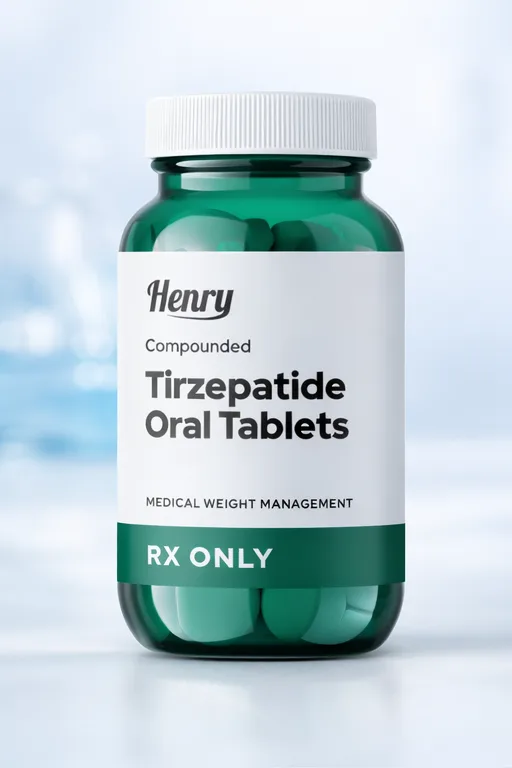
Tirzepatide tablets
Trending(235)Visceral fat—the dangerous adipose tissue stored deep within the abdomen—is notoriously difficult to lose. Tirzepatide tablets are a powerful tool for targeting these toxic fat reserves. By providing a daily surge of GIP and GLP-1, these pills fundamentally alter how your body pa
- HPLC ≥99%
- COA included
- 3rd-party tested
$130.00Order
See top-rated vendors
Compare prices, purity and shipping at a glance.
Reviewed by the Tirzepatideoral Research Team · Last updated February 2026
References & Scientific Sources
- Frias JP, et al. Tirzepatide vs semaglutide in type 2 diabetes (SURPASS-2). N Engl J Med. 2021.
- Rosenstock J, et al. Efficacy and safety of tirzepatide monotherapy (SURPASS-1). Lancet. 2021.
- Ludvik B, et al. Tirzepatide versus insulin degludec (SURPASS-3). Lancet. 2021.
Sources are provided for educational reference. This content is informational and not a substitute for professional medical advice.